Currency Crossings: How Blockchain Facilitates Seamless Live Gaming Experiences Across Jurisdictions
Finley Franke · Jun 6, 2026
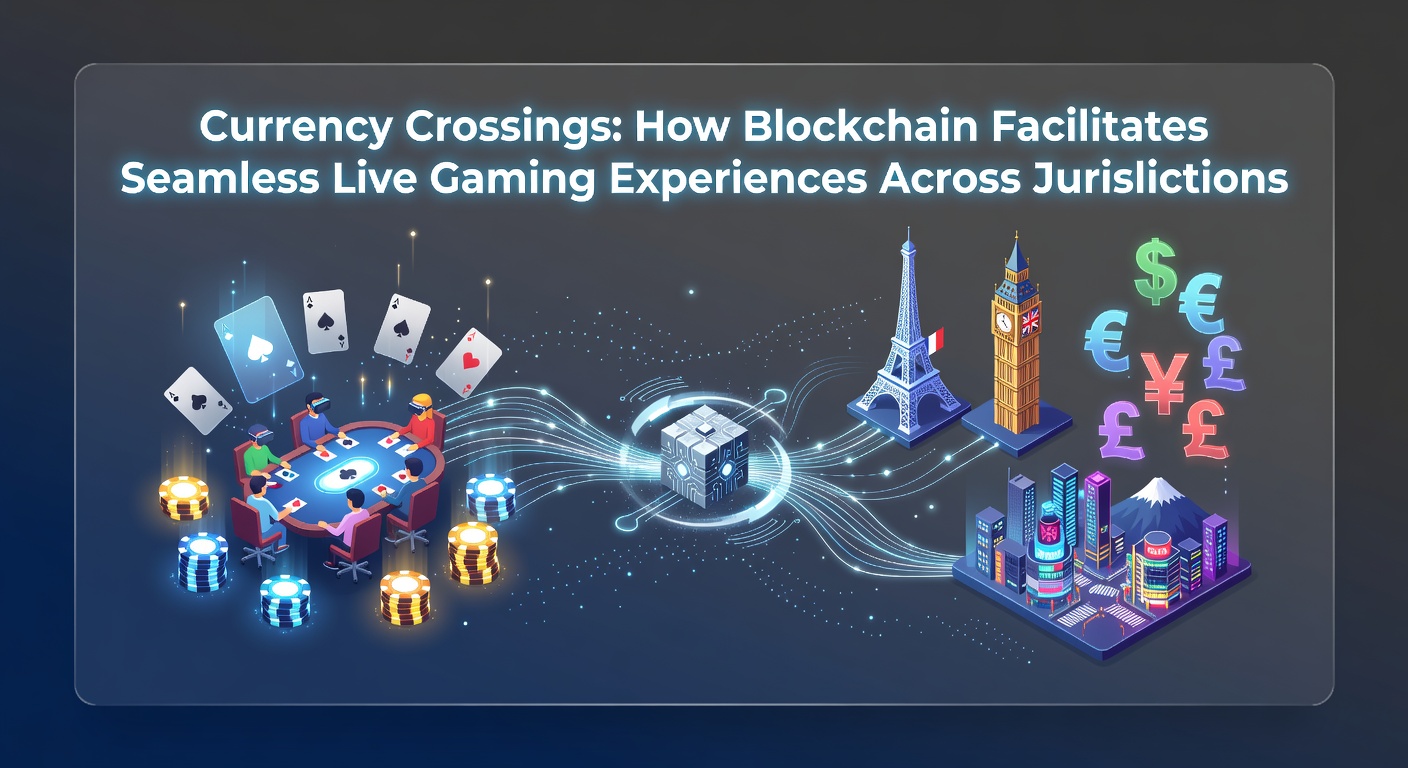
Currency Crossings: How Blockchain Facilitates Seamless Live Gaming Experiences Across Jurisdictions
Blockchain technology has reshaped transaction processing in live gaming environments by enabling direct peer-to-peer settlements that bypass traditional banking delays and currency conversion hurdles. Platforms now integrate distributed ledgers to record player actions and payouts in real time while maintaining consistency across multiple regulatory zones. Data from industry analyses shows transaction confirmation times dropping below three seconds on optimized networks, which supports uninterrupted dealer interactions and instant bonus allocations during sessions.
Core Mechanisms Driving Cross-Border Compatibility
Smart contracts execute predefined rules automatically once conditions such as wager thresholds or jurisdictional compliance checks are met, eliminating manual verification steps that once stalled gameplay. These contracts operate on public or permissioned chains where nodes in different countries validate entries simultaneously. Researchers at the University of Nicosia have documented cases where automated compliance scripts reduced onboarding friction by 60 percent for users moving between European and Asian servers. Cryptographic tokens represent in-game assets and currencies, allowing seamless value transfer without repeated forex fees or intermediary holds.
Regulatory Navigation Through Immutable Records
Jurisdictions impose varying requirements on identity verification, tax reporting, and responsible gaming measures, yet blockchain ledgers provide auditable trails that satisfy multiple oversight bodies at once. A 2025 report issued by Singapore's Monetary Authority highlighted how timestamped transaction histories assist operators in demonstrating adherence to both local licensing rules and foreign data-sharing agreements. Observers note that permissioned blockchain variants let regulators query specific blocks without exposing full user histories, striking a balance between transparency and privacy mandates. In June 2026 several Pacific Rim territories began piloting shared ledger frameworks that synchronize compliance data across borders while preserving operator autonomy over game logic.
Live Dealer Integration and Real-Time Settlement
Live gaming streams benefit directly from blockchain settlement layers because card shuffles, bet placements, and result verifications can be hashed onto chains within milliseconds of occurrence. This approach minimizes disputes since every action receives cryptographic proof that participants and auditors can reference independently. One platform operator reported handling over 2.4 million live roulette spins monthly across 14 jurisdictions with settlement discrepancies under 0.01 percent after adopting multi-chain routing. Players experience continuous sessions even when switching from a European mobile app to a North American desktop interface because wallet balances update universally through synchronized nodes.
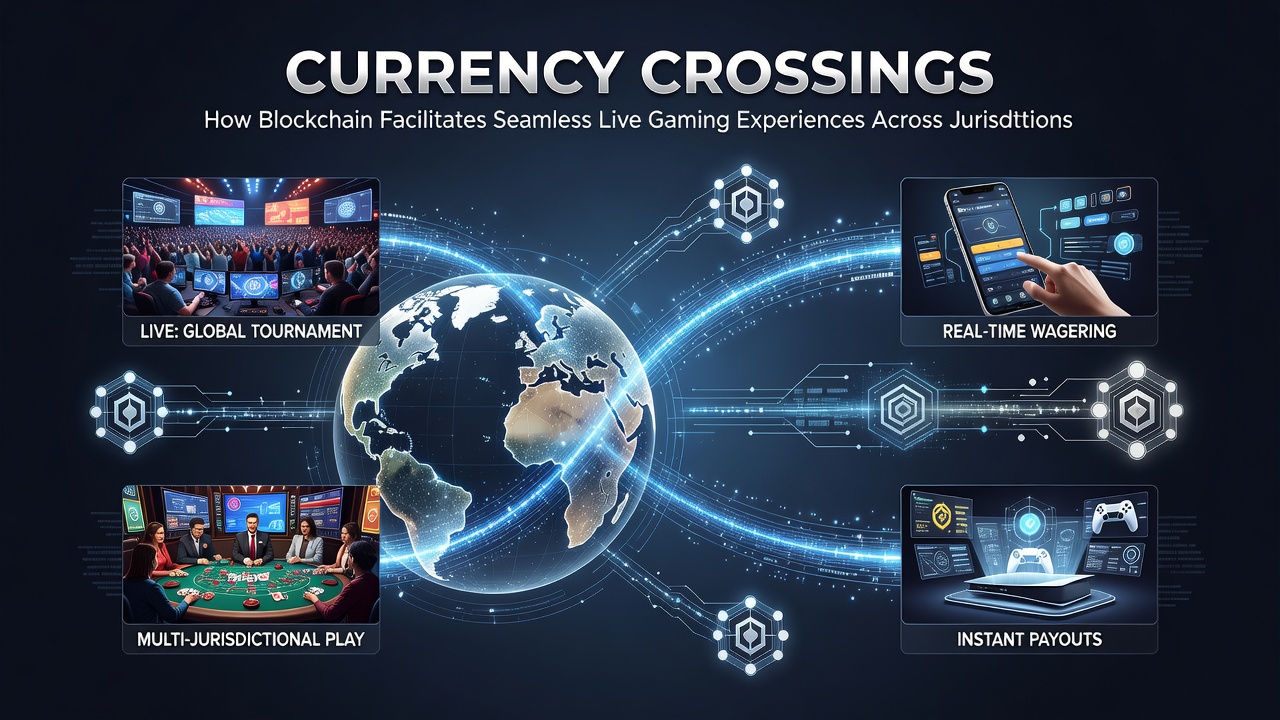
Payment Flow Improvements Across Currency Zones
Traditional payment rails often impose multi-day holds when funds cross from one fiat system into another, but stablecoin integrations anchored to blockchain networks clear equivalent values within a single block interval. According to figures released by the Bank of Canada in early 2026, cross-border gaming-related transfers processed via distributed ledgers averaged 47 percent lower costs than legacy wire services. Operators route stablecoin streams through liquidity pools that automatically convert between supported tokens, shielding participants from volatility while regulators receive verifiable flow reports. Those who manage high-volume live tables have observed fewer chargebacks because blockchain finality prevents reversal after confirmation.
Security Protocols Supporting Global Scale
Zero-knowledge proofs allow platforms to confirm player eligibility or wager limits without revealing underlying personal data, satisfying stringent privacy statutes in regions such as the EU and Australia. Multi-signature wallet architectures require coordinated approvals from geographically dispersed validators before large withdrawals execute, reducing single-point compromise risks. Industry associations tracking security incidents recorded a 78 percent decline in unauthorized access events among blockchain-enabled gaming services between 2024 and 2026. These layered protections operate continuously regardless of which licensing authority oversees any particular server cluster.
Conclusion
Blockchain infrastructure continues to align live gaming mechanics with the realities of fragmented international regulation through automated execution, transparent ledgers, and rapid value movement. As more territories adopt compatible standards by mid-2026, operators gain capacity to deliver consistent dealer experiences while meeting diverse compliance obligations without redundant infrastructure. The resulting architecture supports fluid participation across borders while preserving the integrity of each jurisdiction's oversight framework.